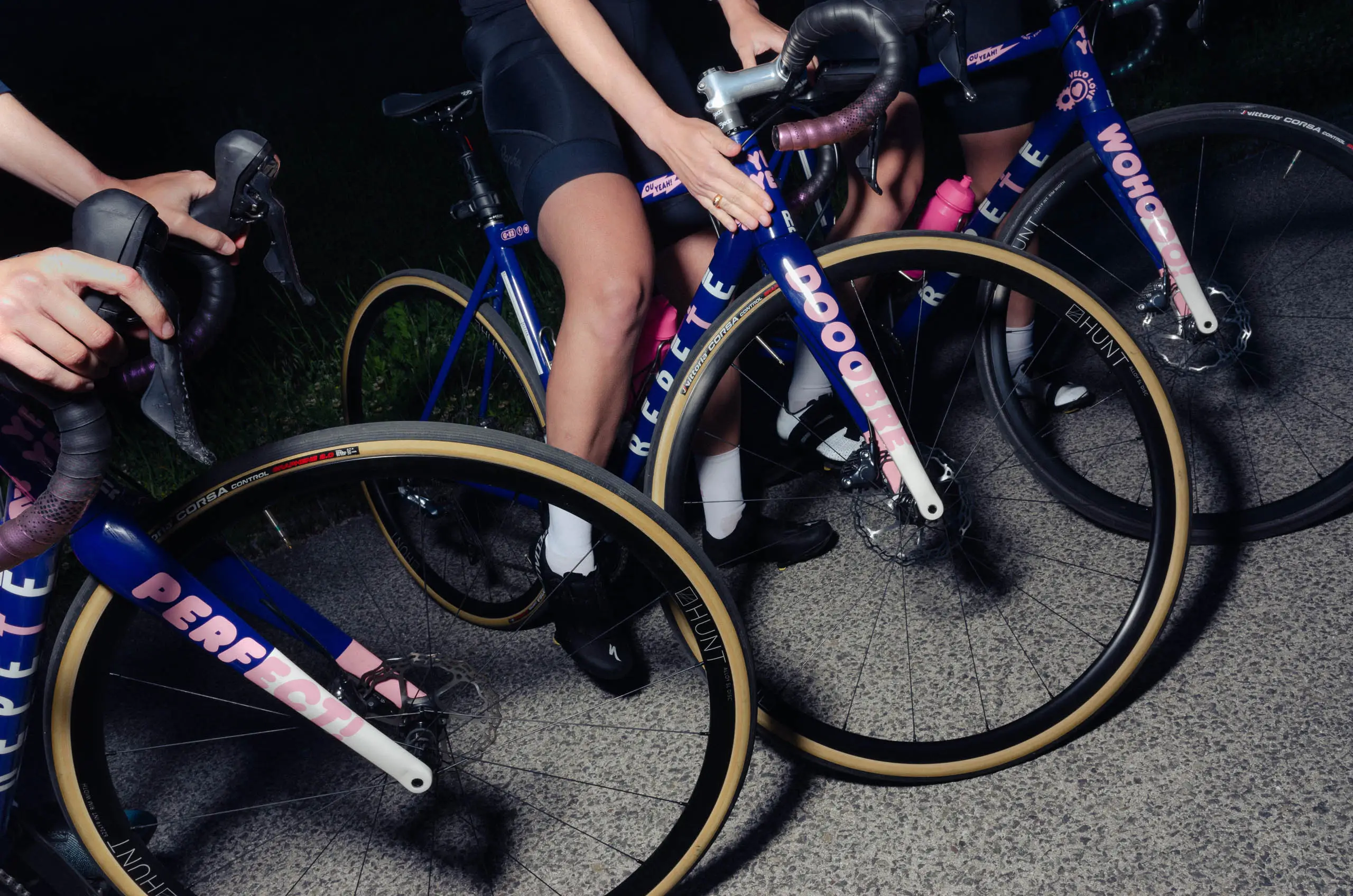
It all started as a joke three years ago. You know those “adult” kinds of jokes: we should meet for a coffee, we should go to a techno party together, we should meet for a playground playdate, we should go cycling in South Korea…
“South Korea? When?”
“Maybe in 2025.”
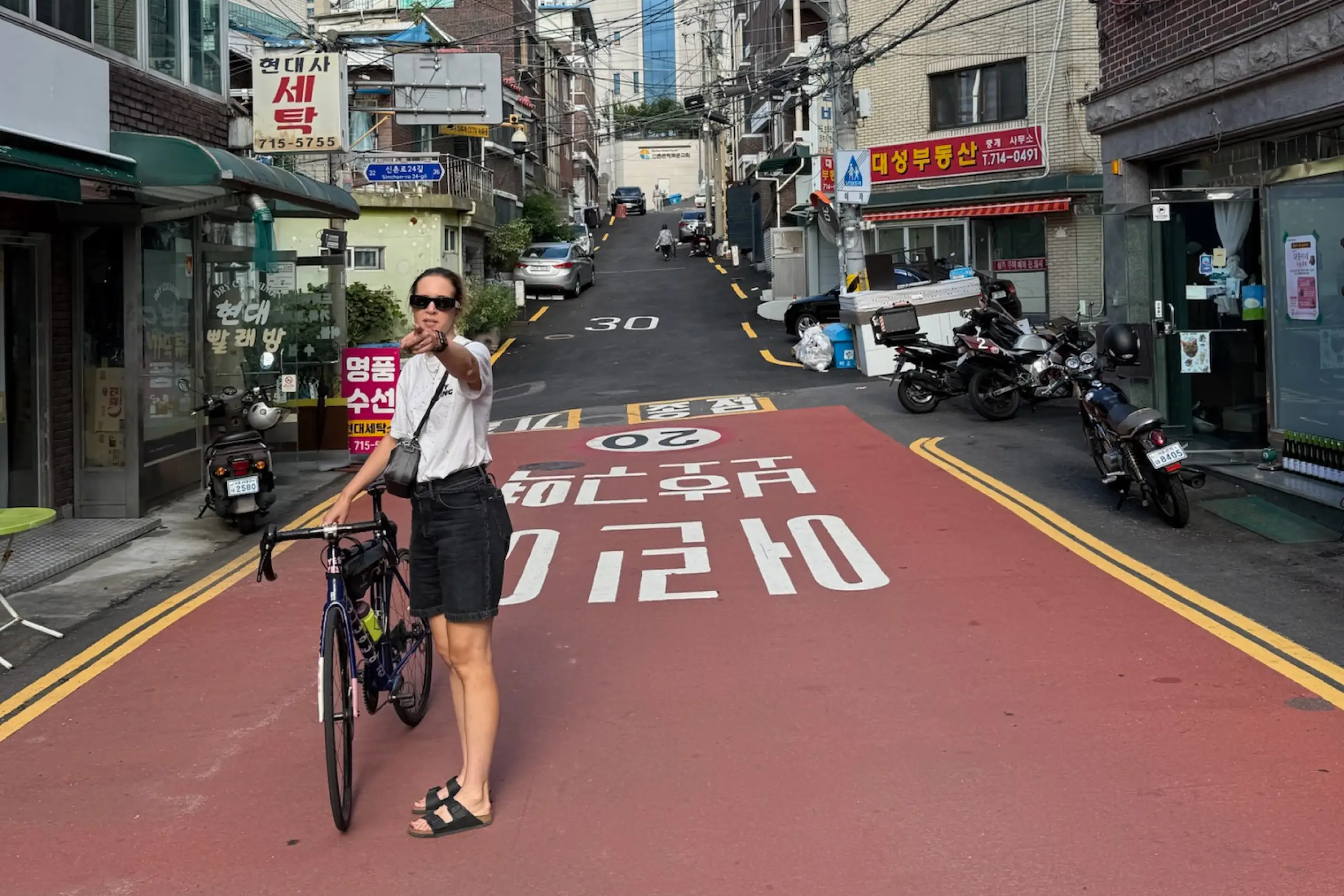
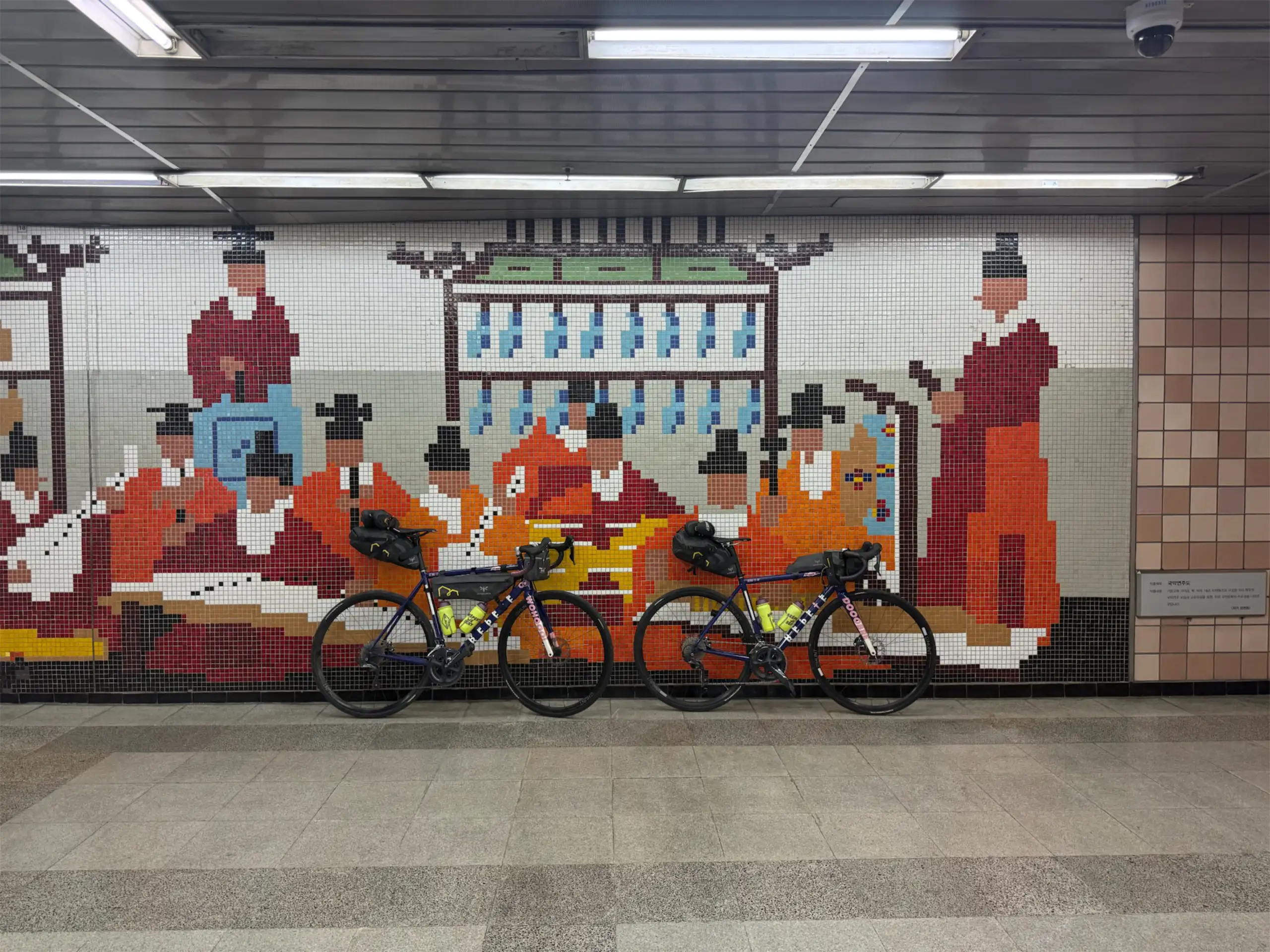
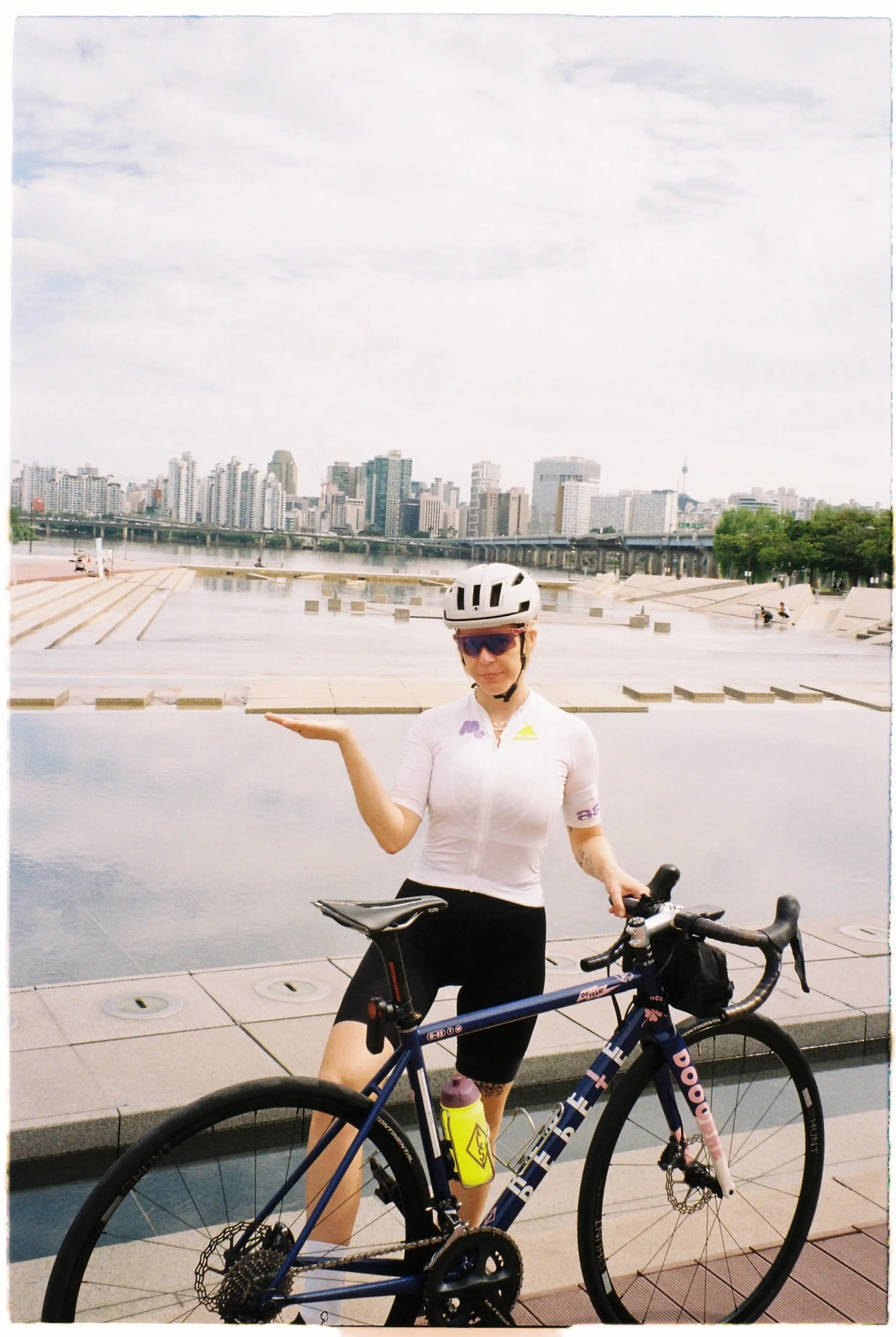
Nobody wanted to be THE person who chickened out, so two years later, in September, there we were, two women from Bratislava, putting our REPETE bikes back together from plane luggage in an underground garage in the middle of Mapo-gu (마포구), Seoul, the capital of South Korea.
Not just a joke anymore, apparently.
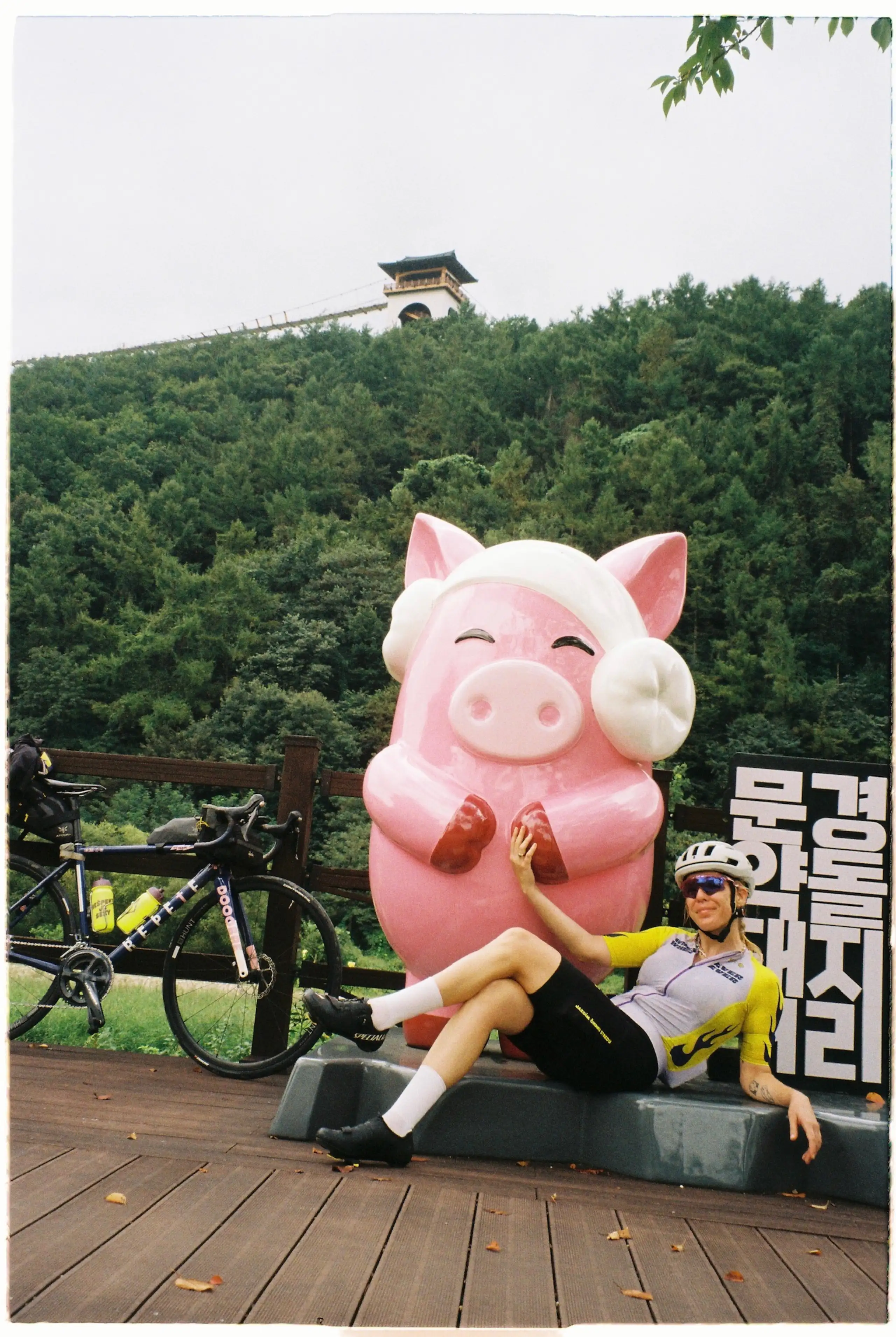
South Korea is famous for many different, more or less questionable things. Cycling though? YES! YES!
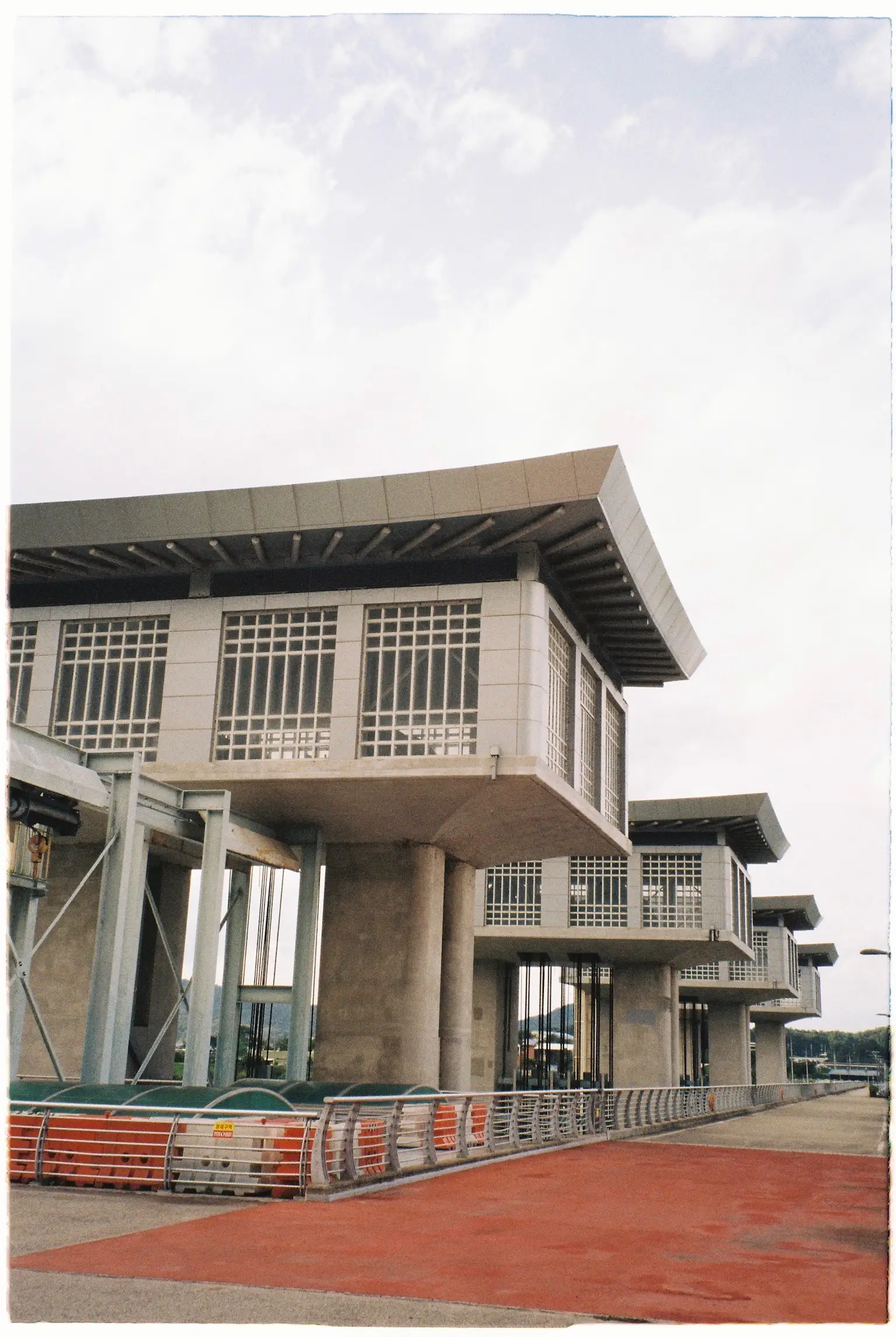
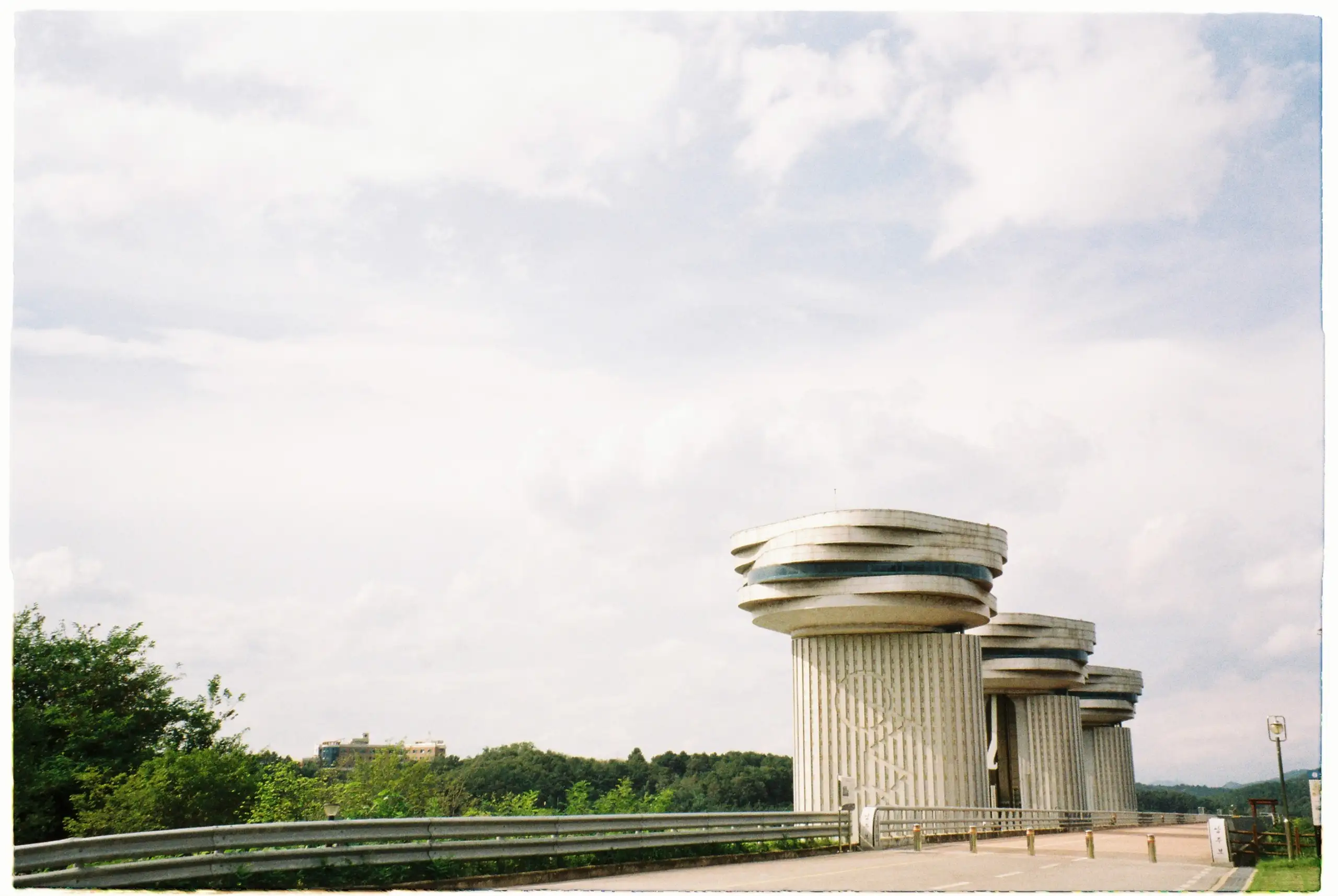
Back in 2009, South Korea went all in on a massive green infrastructure project called the Four Major Rivers Restoration Project (4대강 정비 사업). The country started rebuilding and regulating its biggest rivers — the Han, Nakdong, Geum and Yeongsan — mostly to improve water management after brutal monsoon seasons. Between 2009 and 2011, Korea built a system of dams, reservoirs and 16 huge weirs across the country.
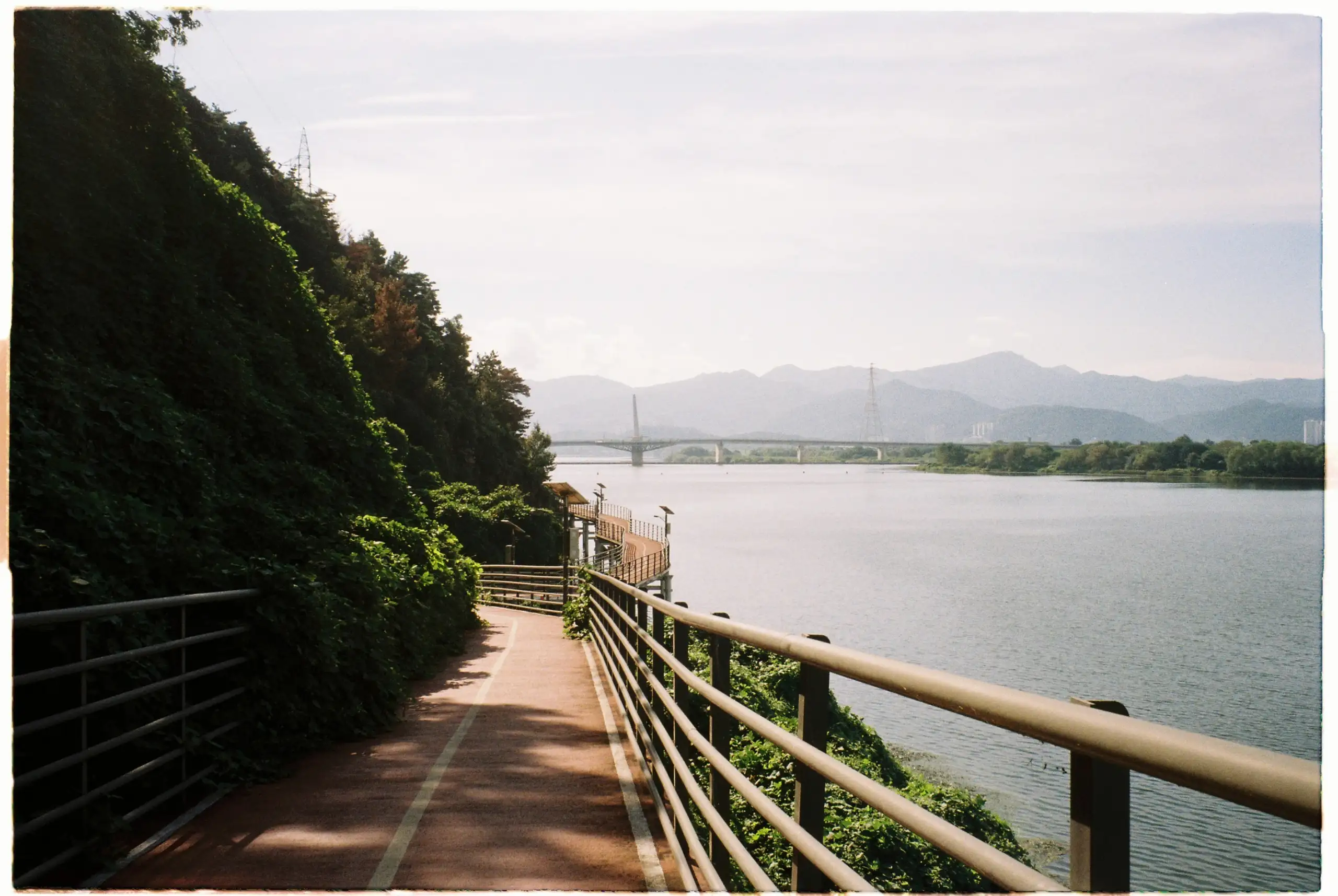
And because this was Korea in its early-2010 “Tiger of Asia” era, they didn’t stop at rivers. They built bike paths alongside them to bring tourism inland, straight into the rural heart of the country. Besides the main Cross-Country route, Korea also offers cycling paths along the East Coast, several other river systems, and all the way around Jeju Island.
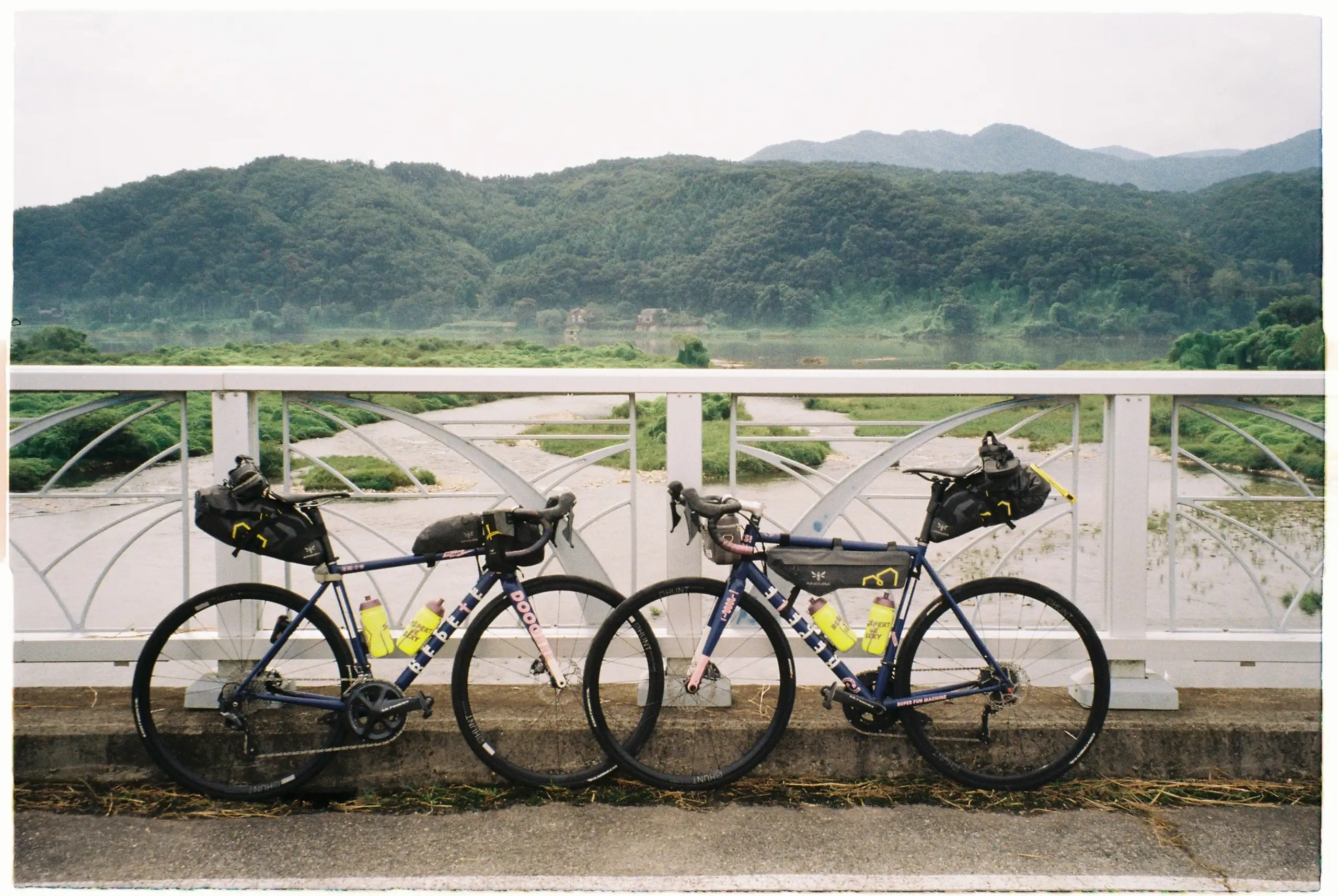
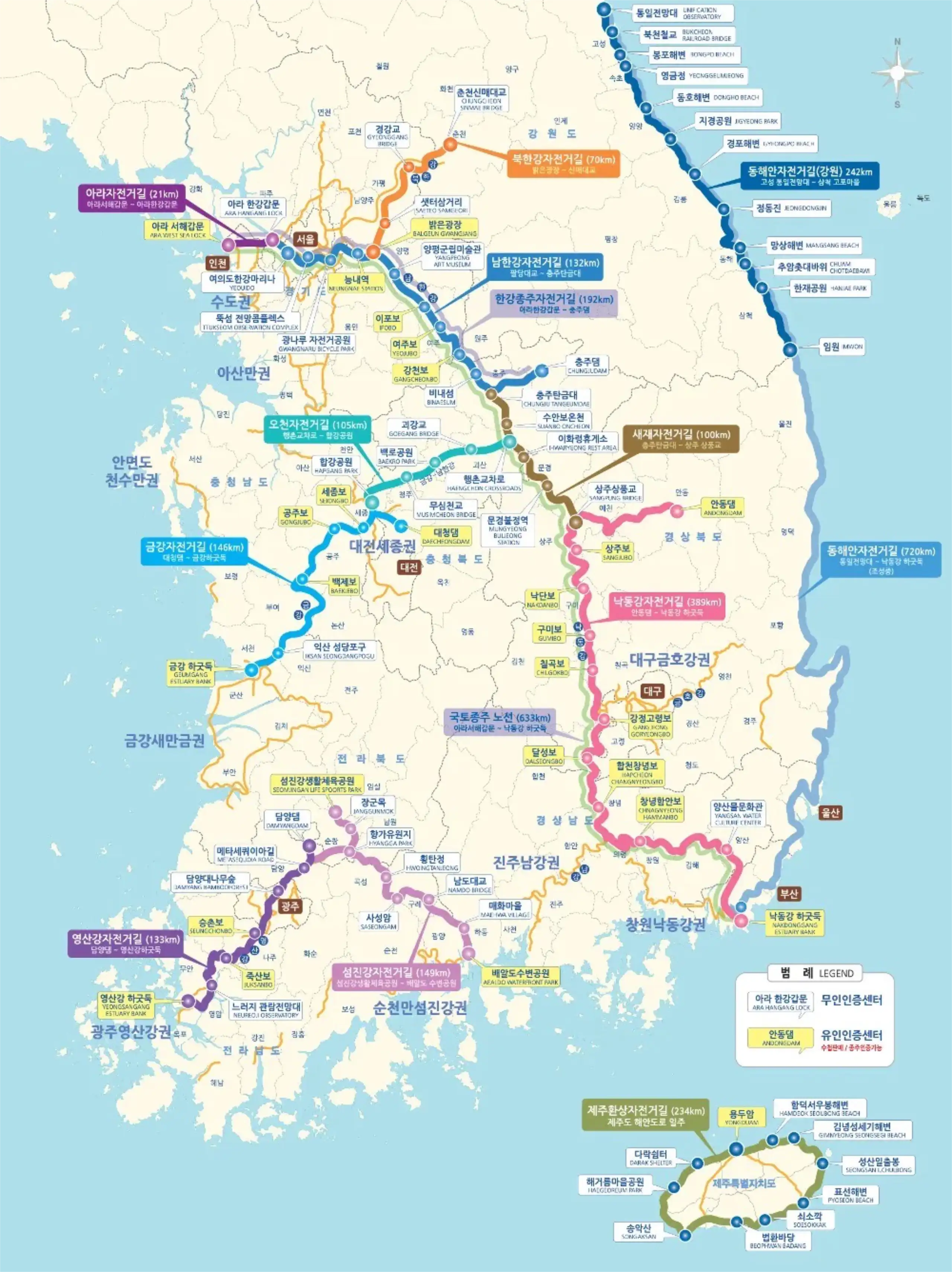
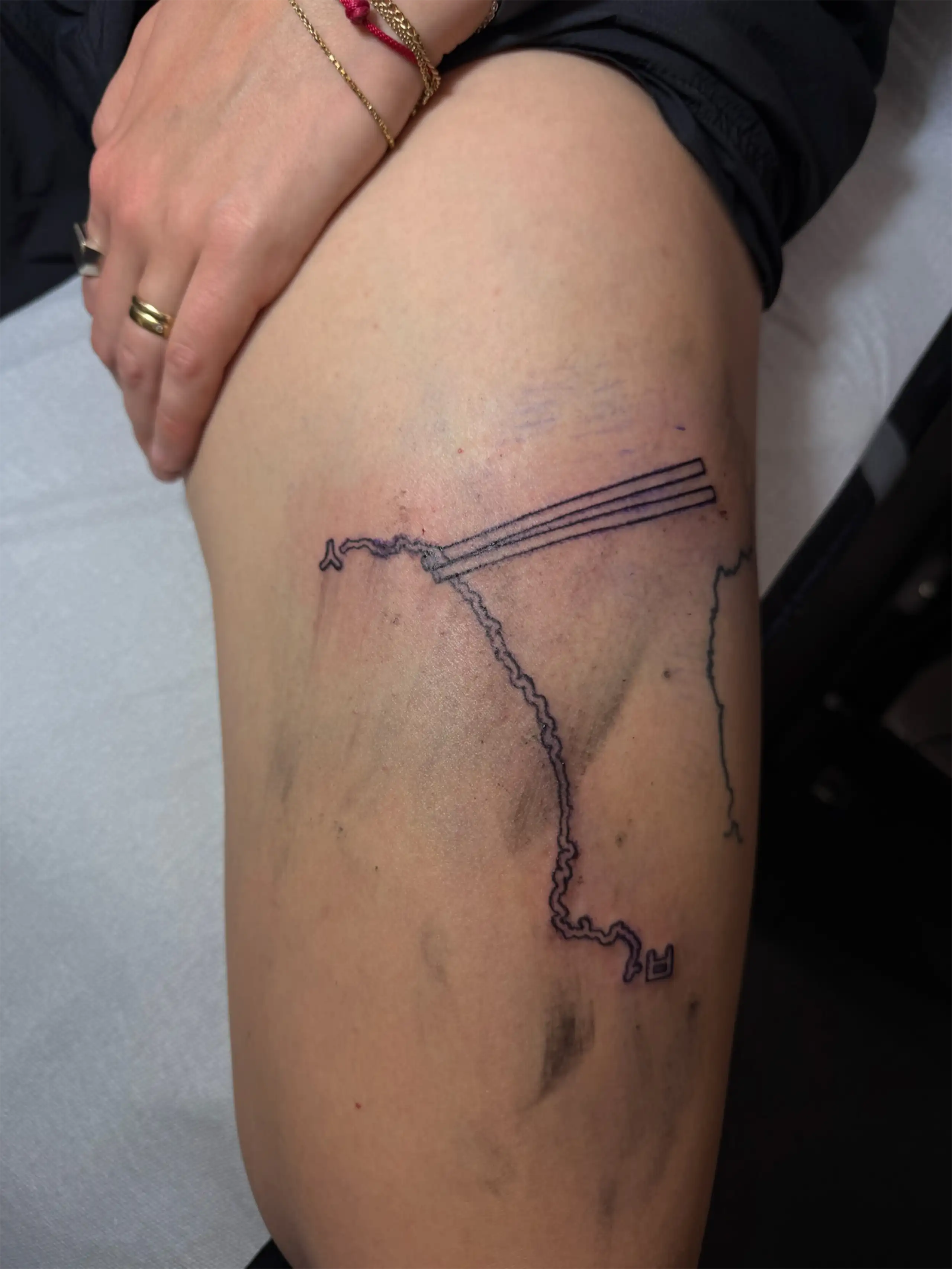
The Cross-Country Cycling Route is around 640 km long and connects Incheon, near Seoul, with Busan on the southern coast. The route crosses almost the entire Korean peninsula, following rivers through mountains, rice fields, sleepy villages and “vintage” cities before eventually reaching the Nakdong River estuary (낙동강 하구) near Busan.
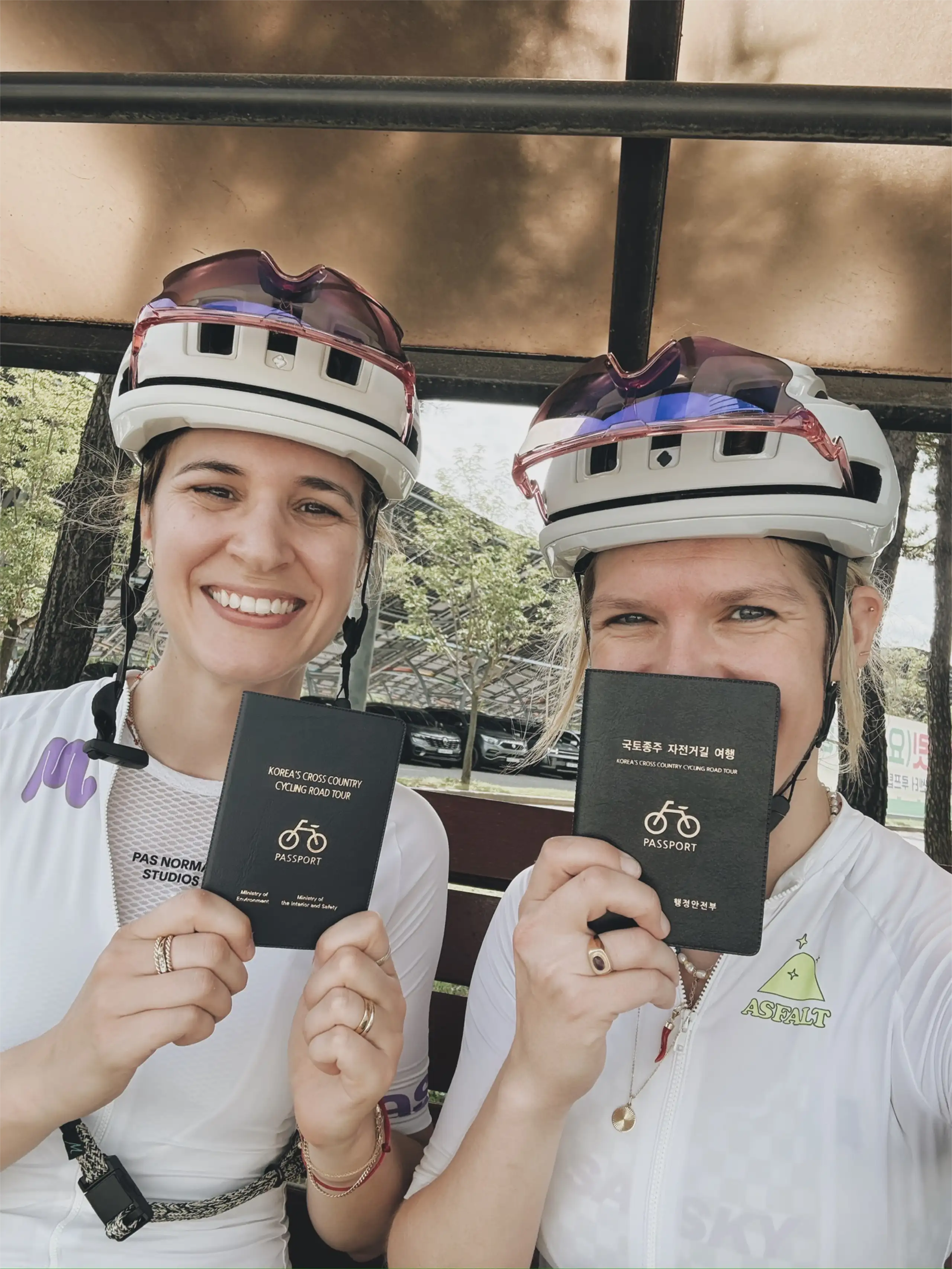
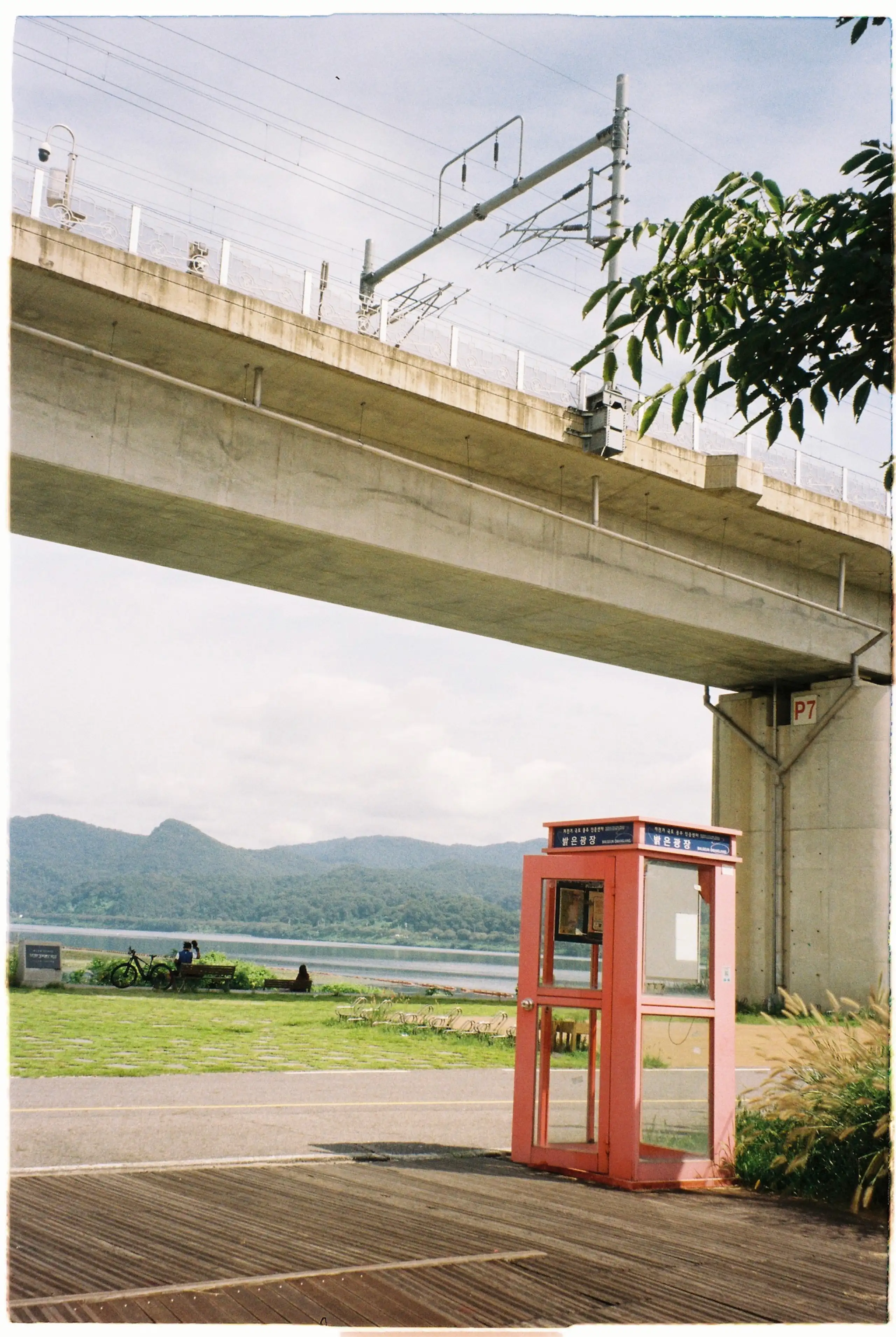
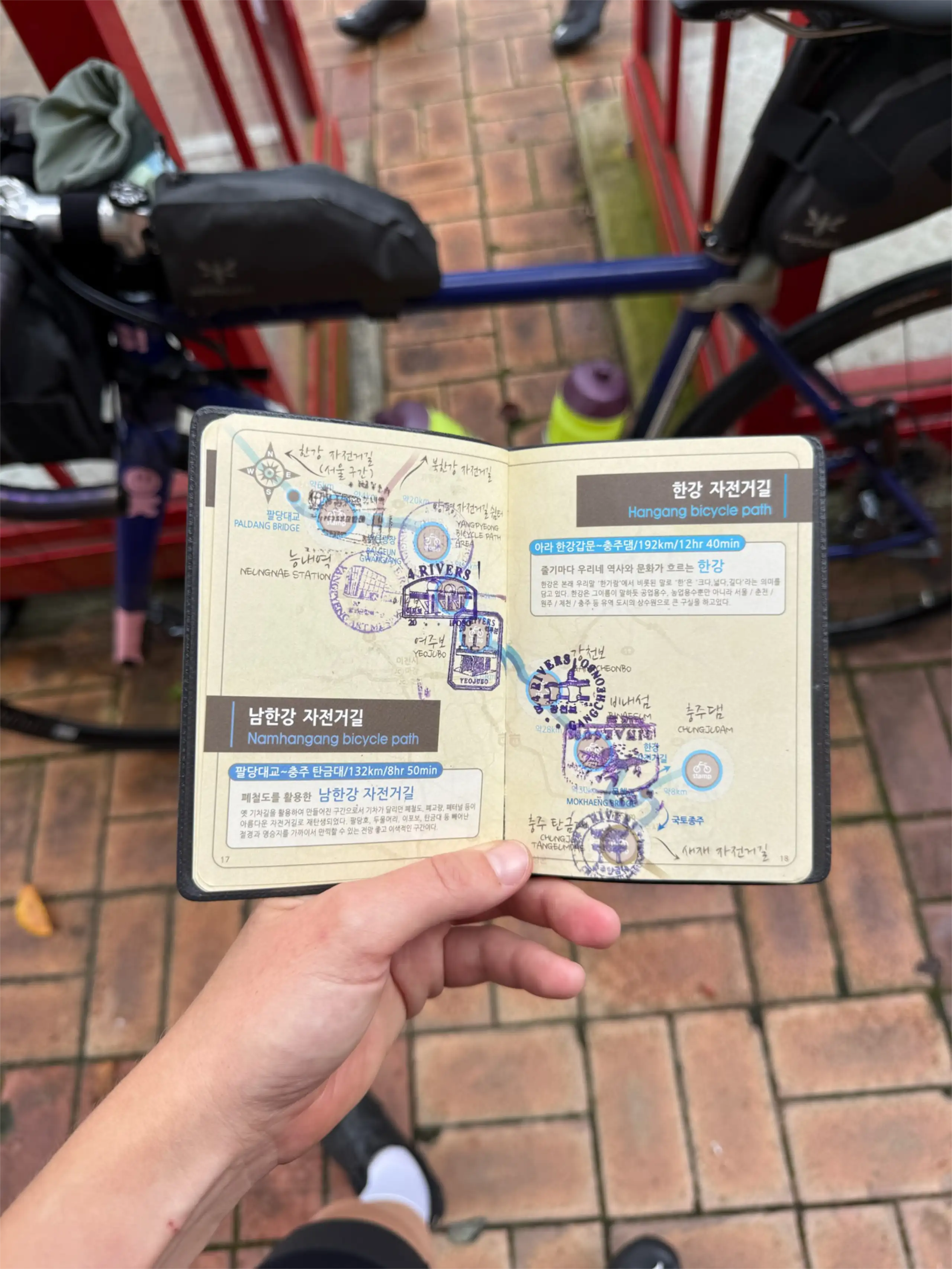
And because Korea loves a bit of competition, you can (but don’t have to) ride it officially under a government-backed system run by the South Korean Ministry of Land, Transport and Maritime Affairs. There’s an official cycling passport where you collect stamps at designated checkpoints along the route (red telephone boxes).
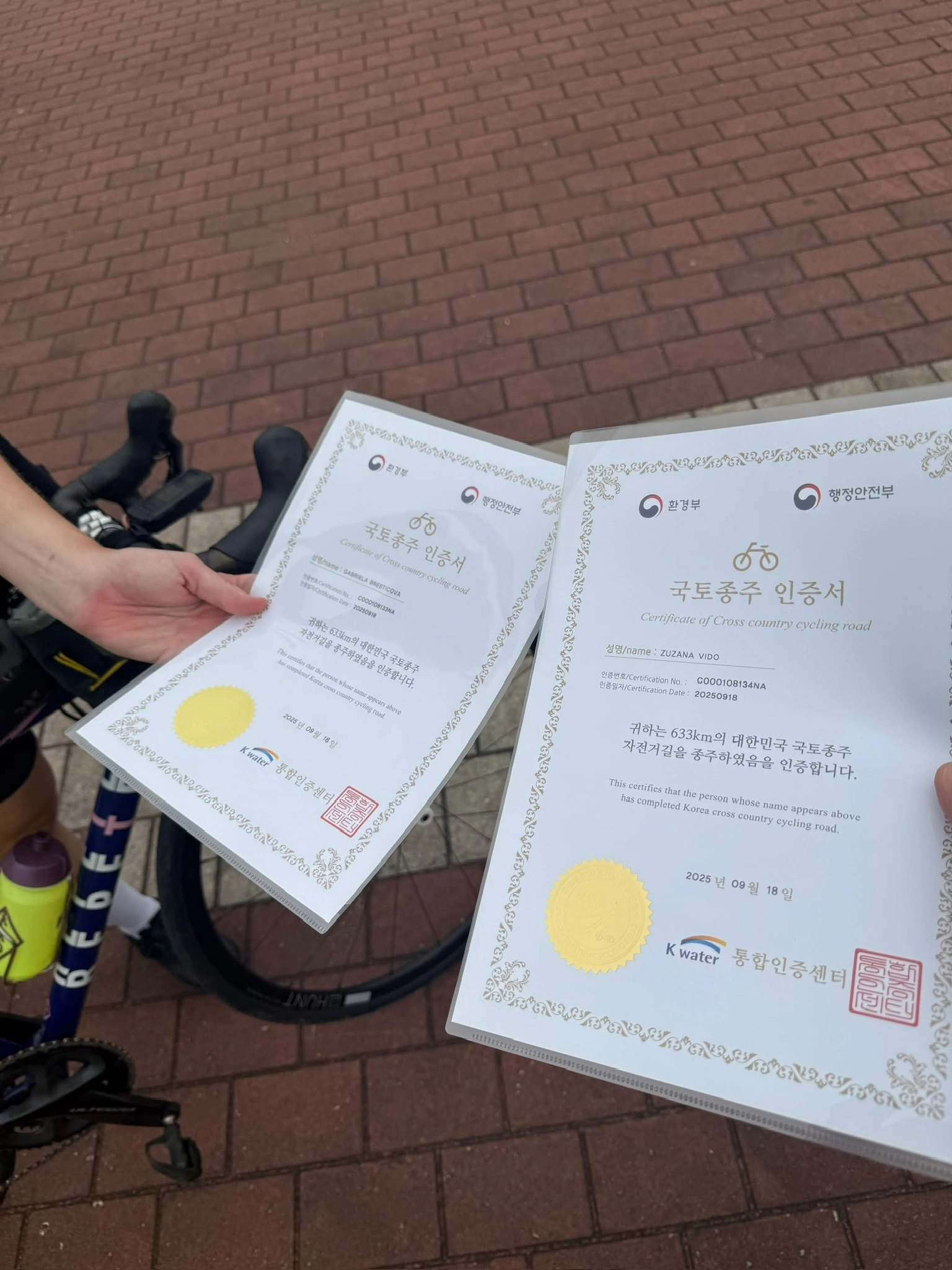
Every section has its own name and a set number of stamps. Once you complete a section, you get a special silver stamp, and after finishing the full route, a gold stamp. Only then do you qualify for an official certificate from the Ministry confirming you completed part of the journey. You can even see how many people have done it before you — and in a country of 52 million, 14 years after opening, the number is surprisingly small.
But before the certificate, the handshake, and the polite congratulations at the finish line, there’s still the small matter of actually riding 640+ km across the entire peninsula.
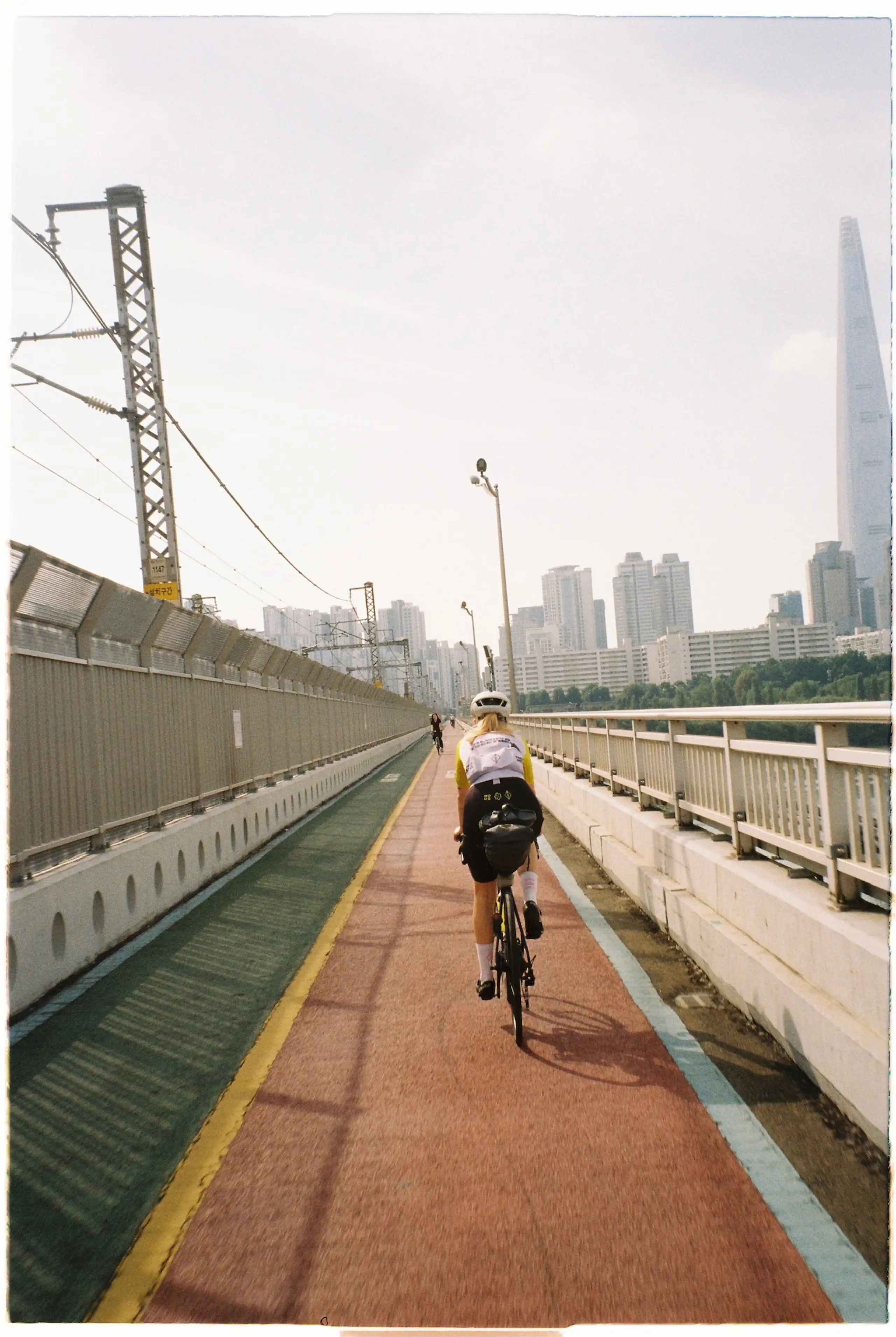
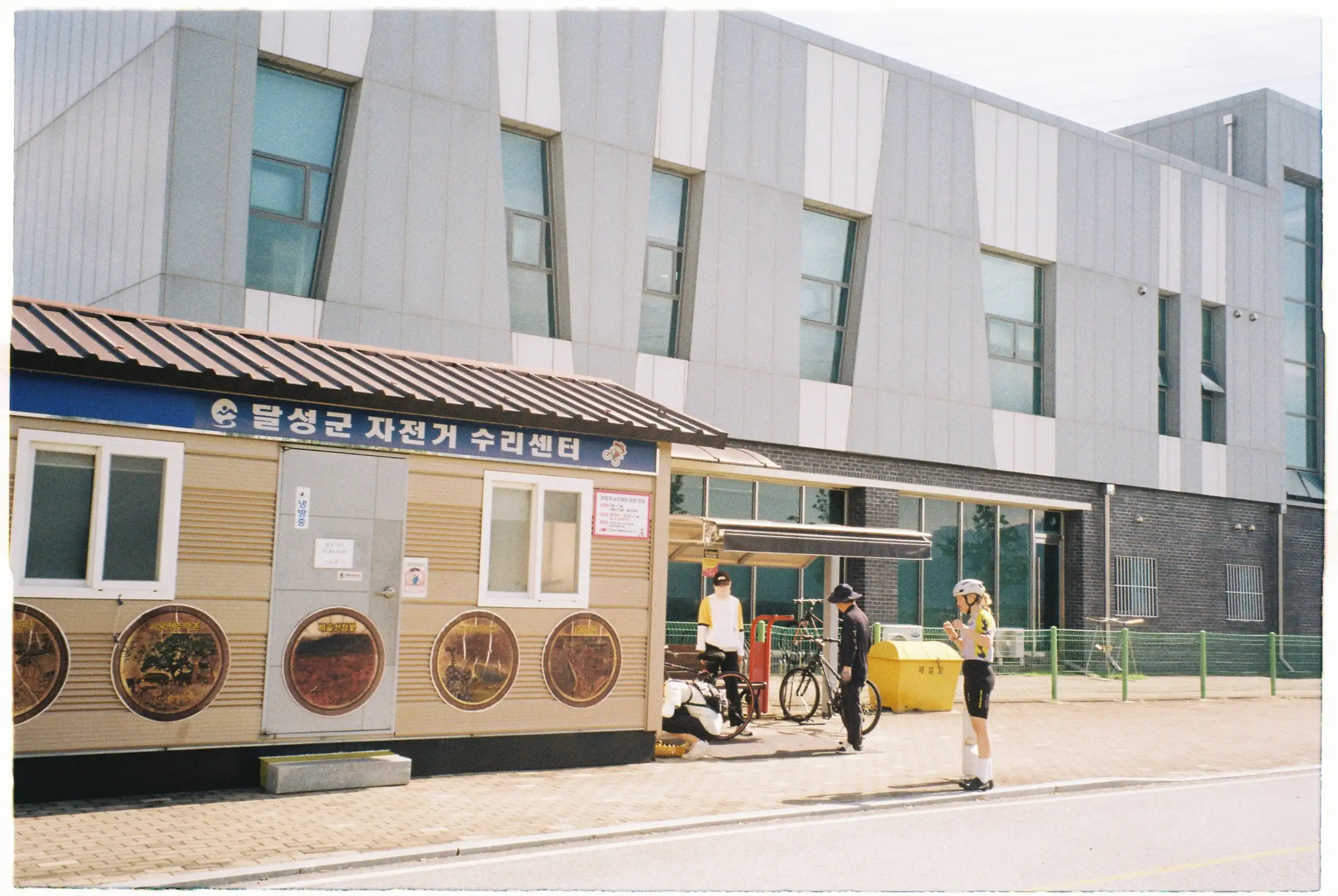
We start in the city and quickly join the Han River cycling path. Even on a weekday, it’s packed with group rides, solo cyclists and runners. There are plenty of places to stop too: cafés, convenience stores and riverside rest areas.
But after about 60 km from Seoul, at the river confluence, it’s like someone drew a line. The crowds disappear, settlements thin out, and we suddenly find ourselves almost alone on a quiet, open bike path.
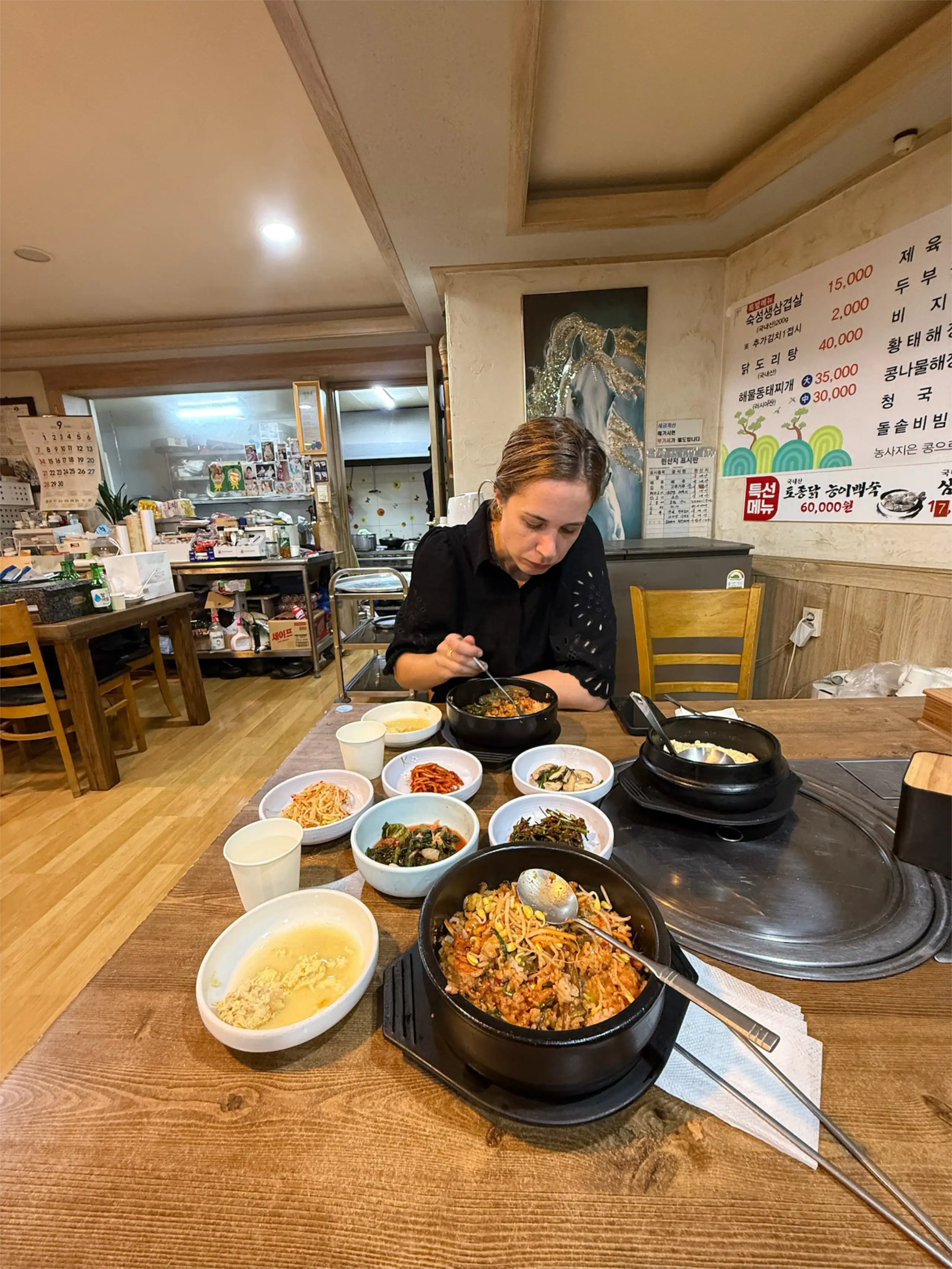
Around 82% of South Korea’s population lives in cities, and as we ride through empty villages, farmland, lotus ponds and endless rice fields, everything feels completely different. Out here, real local life still revolves around the smallest places like neighborhood convenience stores. These tiny shops become unofficial meeting points where you can get literally everything you need and dream of in one stop. And by everything, we really mean everything. We realised that after this trip, we will never be satisfied with European gas station stops while cycling back home.
The north of the country feels surprisingly familiar. Dense deciduous forests that could easily be somewhere in Europe if only they came with 30°C heat and 92% humidity. Thankfully, countless tunnels help cyclists (and half-cooked us) cool down and cut through the mountains.
„And because Korea loves a bit of competition, you can (but don’t have to) ride it officially under a government-backed system run by the South Korean Ministry of Land, Transport and Maritime Affairs.”
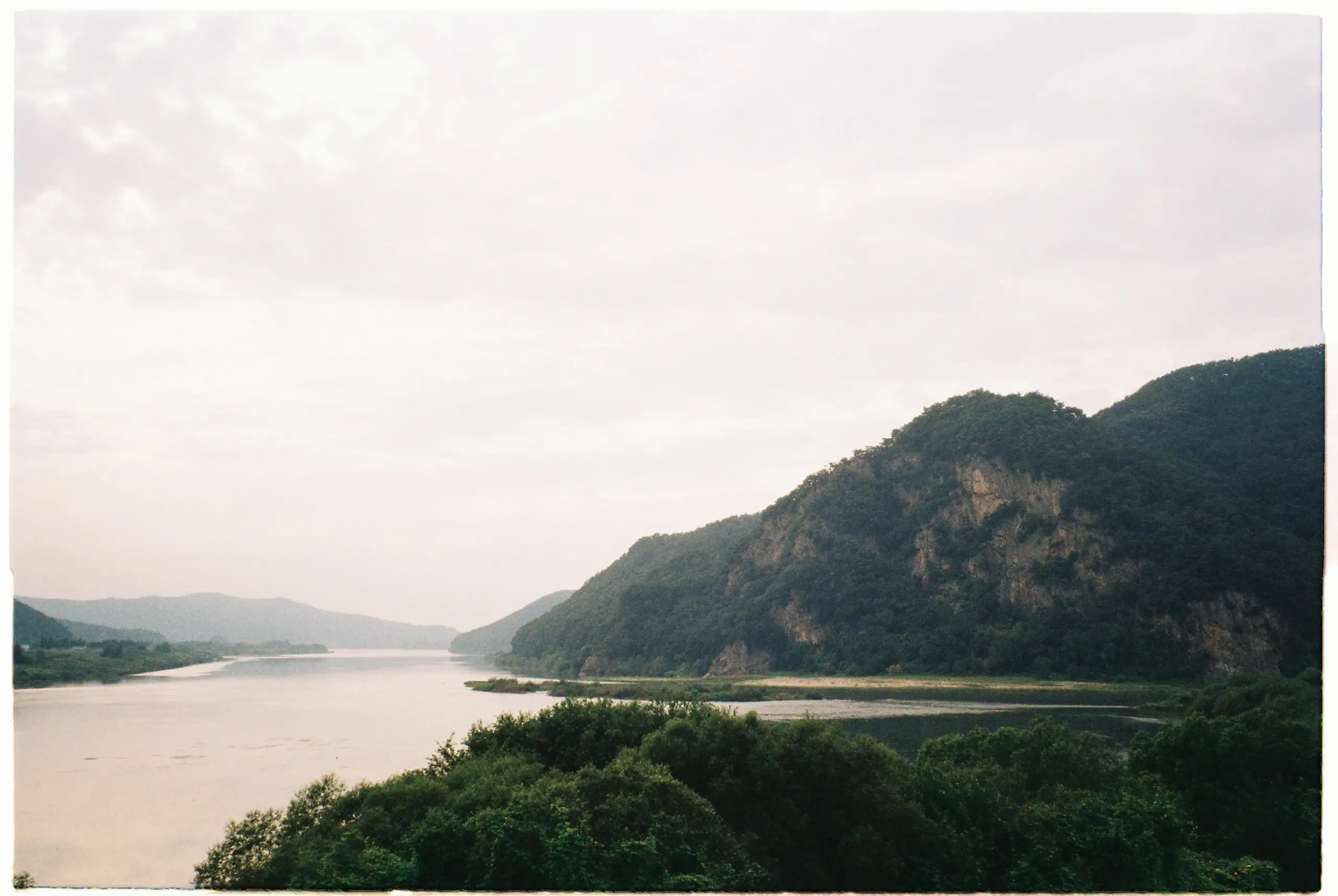
By the second day, the landscape opens up. South Korea and Central Europe share a similar latitude and four distinct seasons, yet everything seems bigger somehow. The mountains are steeper, the valleys wider, and the views far more dramatic.
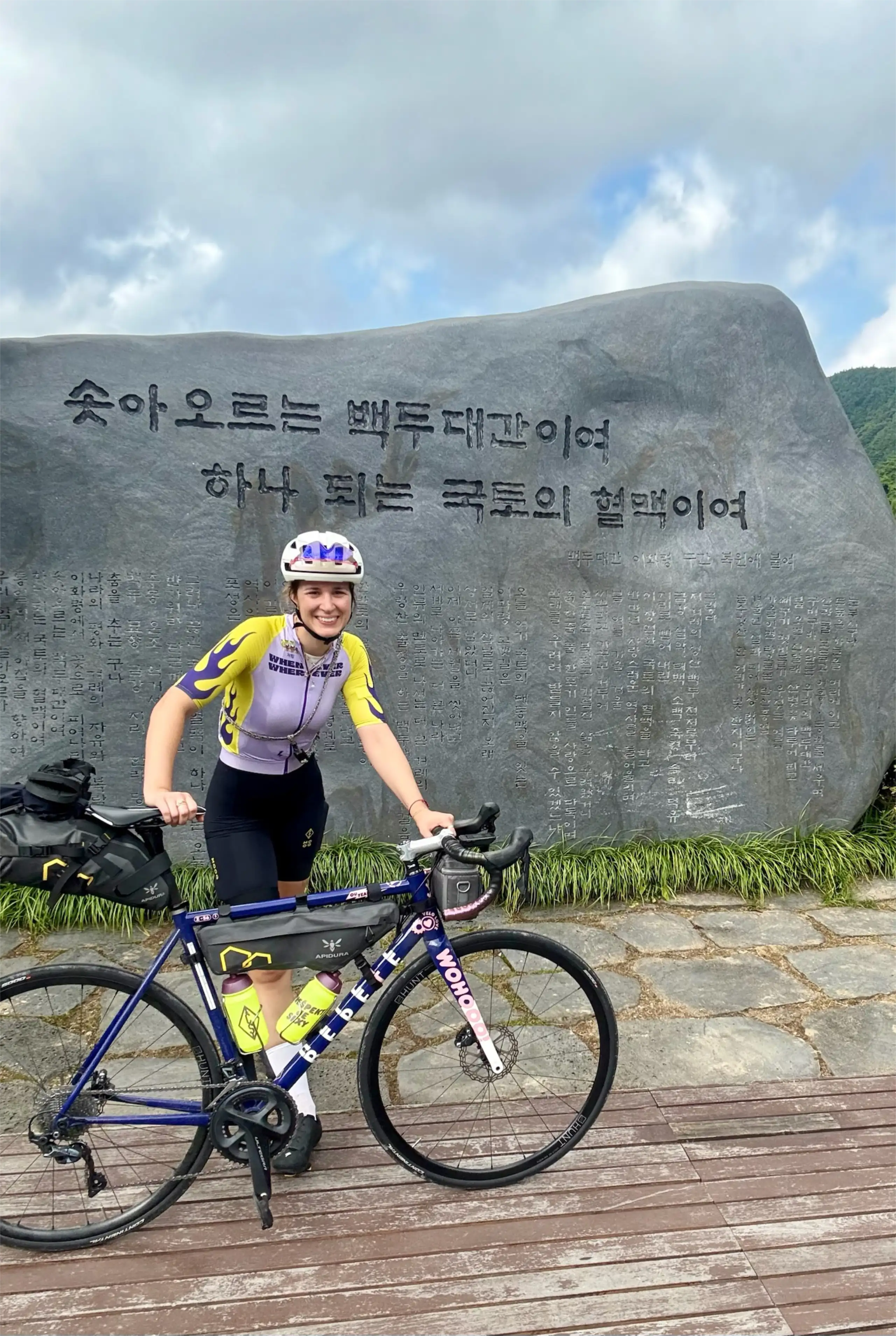
Our steel bikes are stealing glances and thanks to them we’re finally putting our Korean to use. Quick chats with fellow cyclists and groups of elders refresh our otherwise empty road segments. “어디에서? 슬로바키아? 흠… 아, 체코슬로바키아? 알아요, 알아요.”
Every local we meet tells us the same thing: women on this route are still a rare sight. Which is a shame. For almost the entire 640 km, we ride on dedicated cycling paths, and thanks to South Korea’s extensive CCTV network and very low levels of petty crime, the route feels remarkably safe. In one hotel in Gyeongsang Province, we leave our bikes in an open garage overnight. When we ask at the reception if it’s safe and whether someone might steal them, the receptionist looks confused, as if the question itself doesn’t really make sense. The next morning, the bikes are exactly where we left them.
Safety was one of the main reasons we chose South Korea for this bikepacking trip, and throughout the journey, it never gave us a reason to doubt that decision.
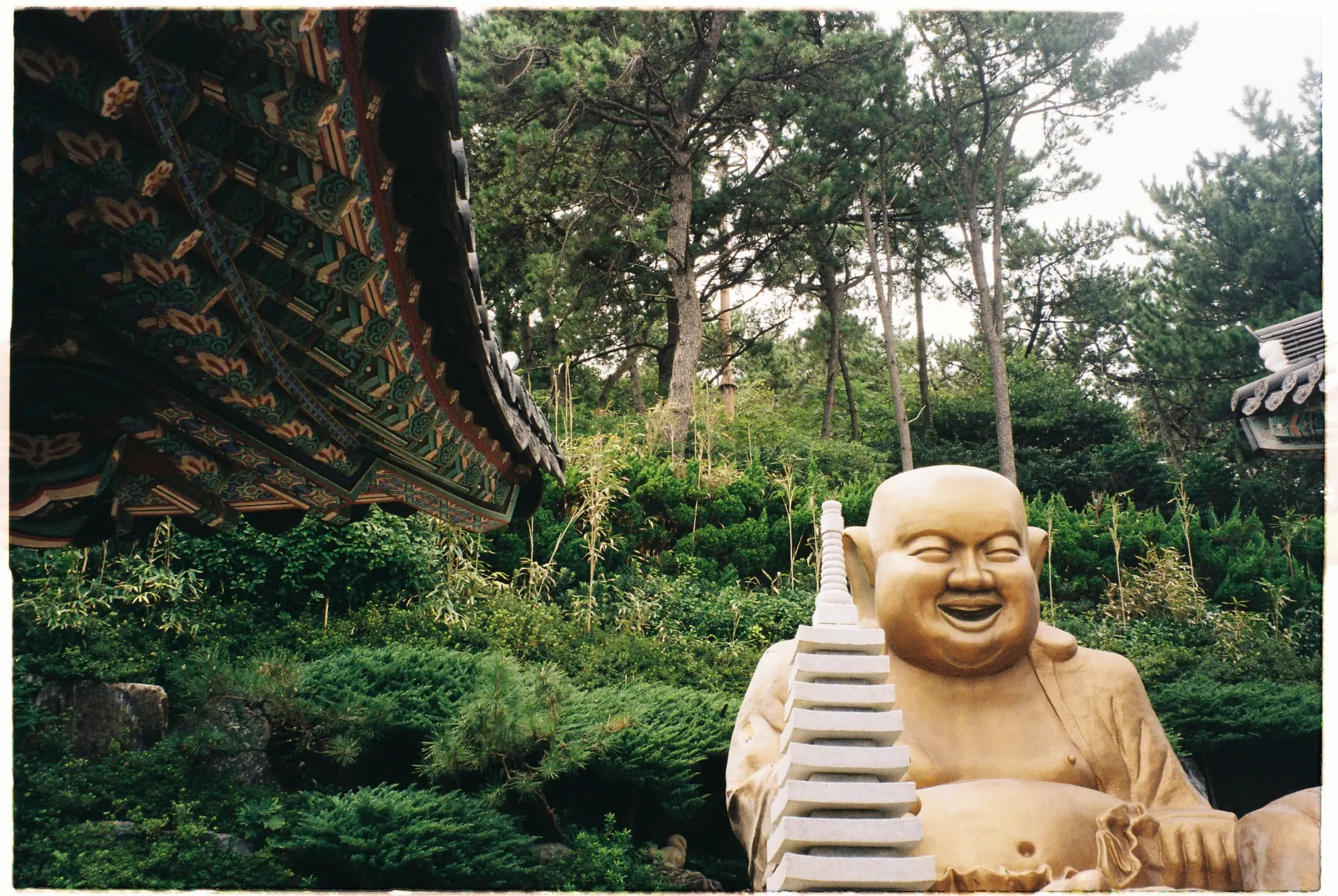
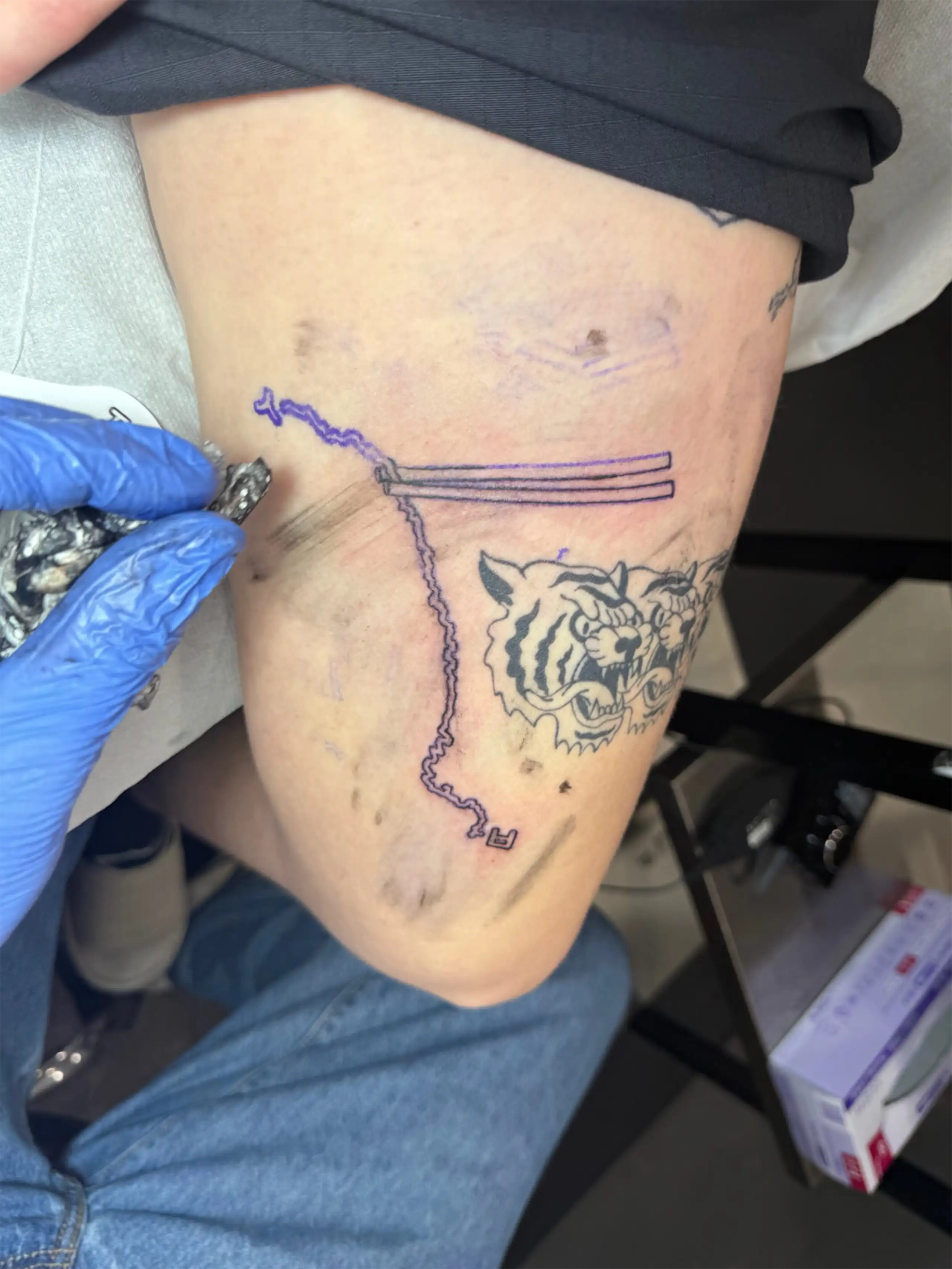
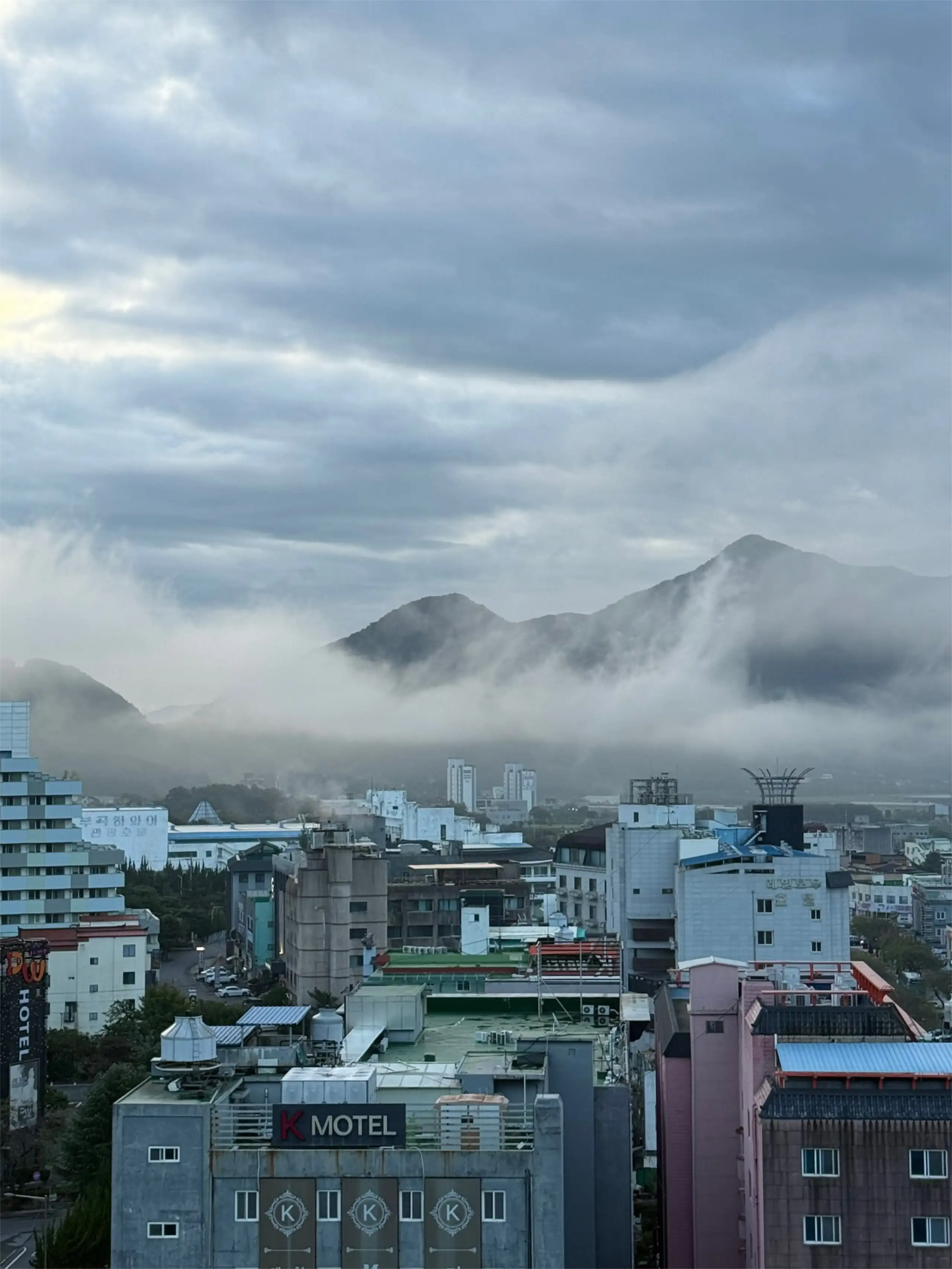
The south of the country felt like a dream. Thick mist rolling down from humid forests into the valleys, and prayers echoing from a Buddhist temple high on the hill. We didn’t need much imagination to picture what this place must have looked like during the Joseon dynasty, and we’re pretty sure we even caught a glimpse of a tiger moving through the fog between the rocks 🙂
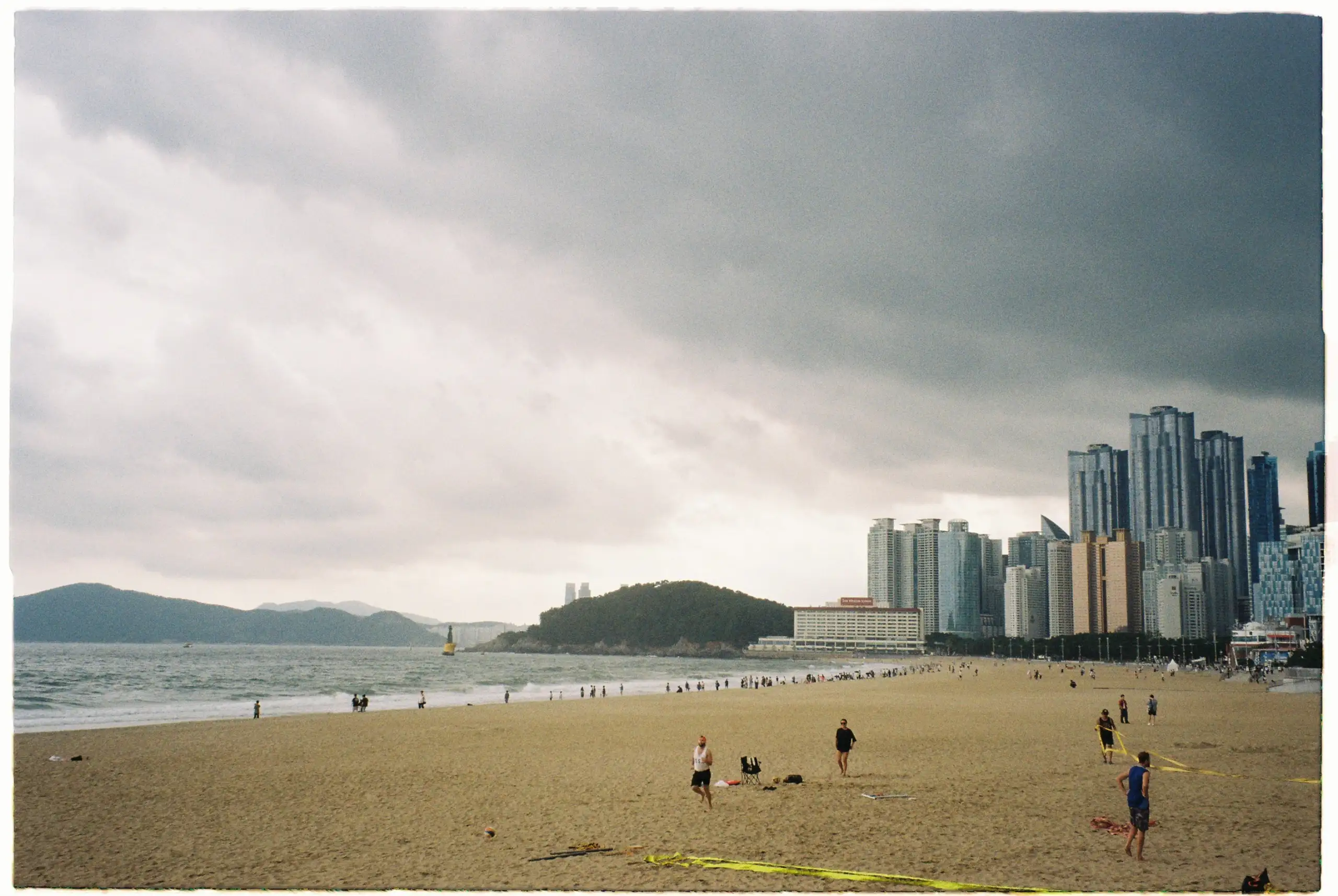
After four days, we finally rolled into Busan. Rice fields and lotus ponds guarded by herons, along with endless peach orchards stretching beside the cycling path, slowly give way to a densely packed, rugged coastline.
“We didn’t need much imagination to picture what this place must have looked like during the Joseon dynasty, and we’re pretty sure we even caught a glimpse of a tiger moving through the fog between the rocks. ”
After days of waving at the occasional farmer and letting locals tap our bikes just to check they’re real steel, we now have to readjust to the full sensory overload of Busan, Korea’s second-largest city, and a place that never really switches off.
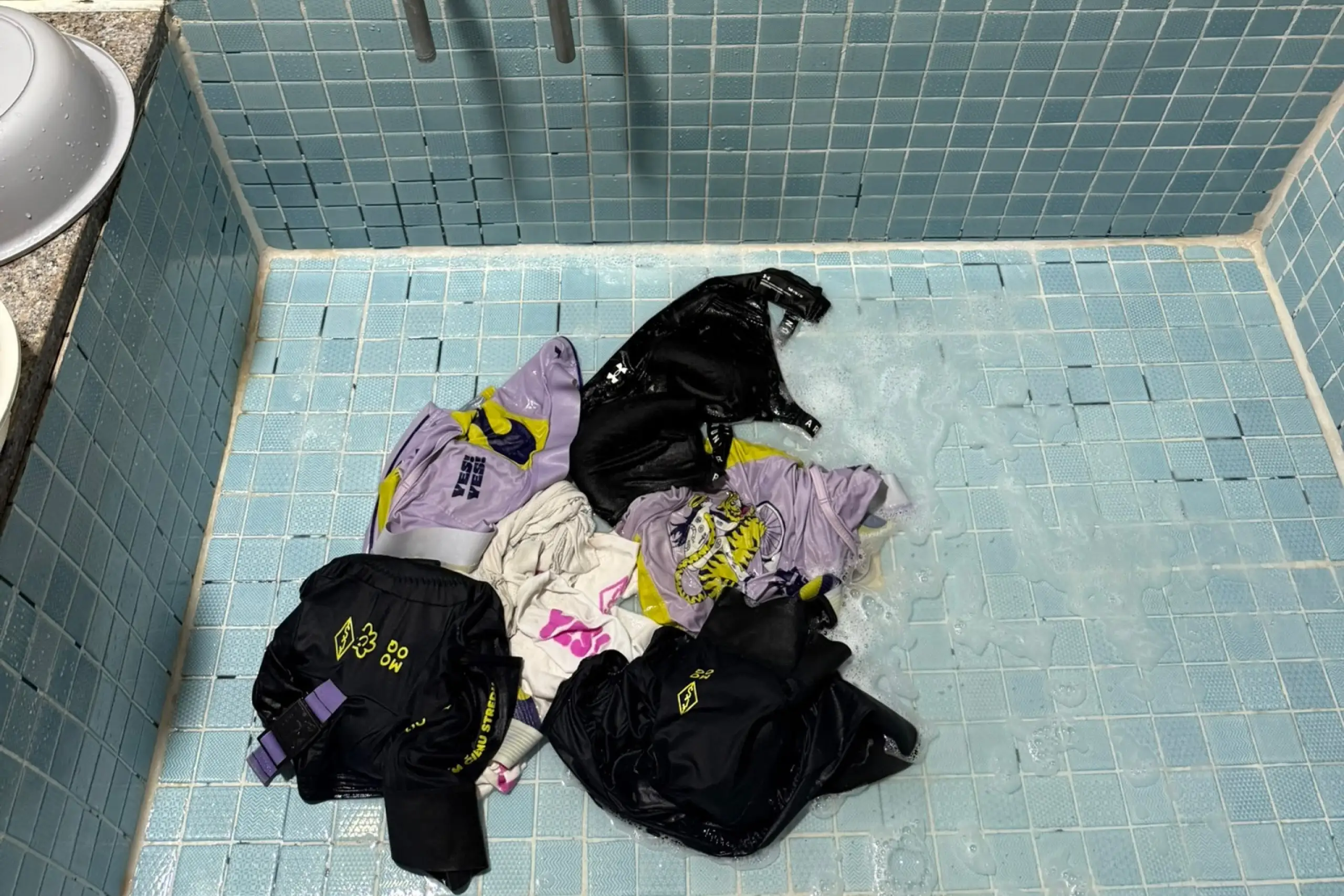
We’re honestly so grateful for the air-conditioned spaces and the cold sea we can jump into to cool down. Ten-hour days in sweat-soaked jerseys are finally over, and yet it’s hard to believe that this trip which started as nothing more than a casual joke in a small talk conversation actually happened and is now already coming to an end.
From now on, whenever someone says South Korea, the first thing that comes to mind is the perfect place for a cycling adventure.
Jazdím Čiernu Stredu Gabriela Brestičová & Zuzana Vido (Zita wasn’t with them this time)
There are three of them, and together they lead a women’s amateur cycling club in Bratislava. They don’t prepare for races or accumulate kilometers in online apps. They ride for joy and fun, not only on Wednesdays, even though their club is called “Jazdím Čiernu Stredu” (I Ride Black Wednesday). For Zuz, Gabika and Zita Repete produced 3 unique pieces of the frameset as part of the „Decode your Team“ service. Graphic design was done in collaboration with Matěj Špánik.
24. 09. 2023 | text: Robin Fišer, Tatiana Vomáčková
They call themselves "baby," read in Czech, or rather in Slovak, no "bejby." There are three of them, and together they lead a women's amateur cycling club in...
Thank you all for coming. We were happy to show you where our frames are made and guide you through the manufacturing process. Thanks also to our partners Pivovar Obora, FreezyPeezy and BreadFit. For ...
27. 04. 2021 | text: text: Robin Fišer, Choonwei Tay
We’d like to introduce Choonwei Tay, who recently opened his third FITSKUUL bike-fitting studio in Southeast Asia. We have known each other since we participated in NAHBS 2015, and we are pleased wi...